Quick answer
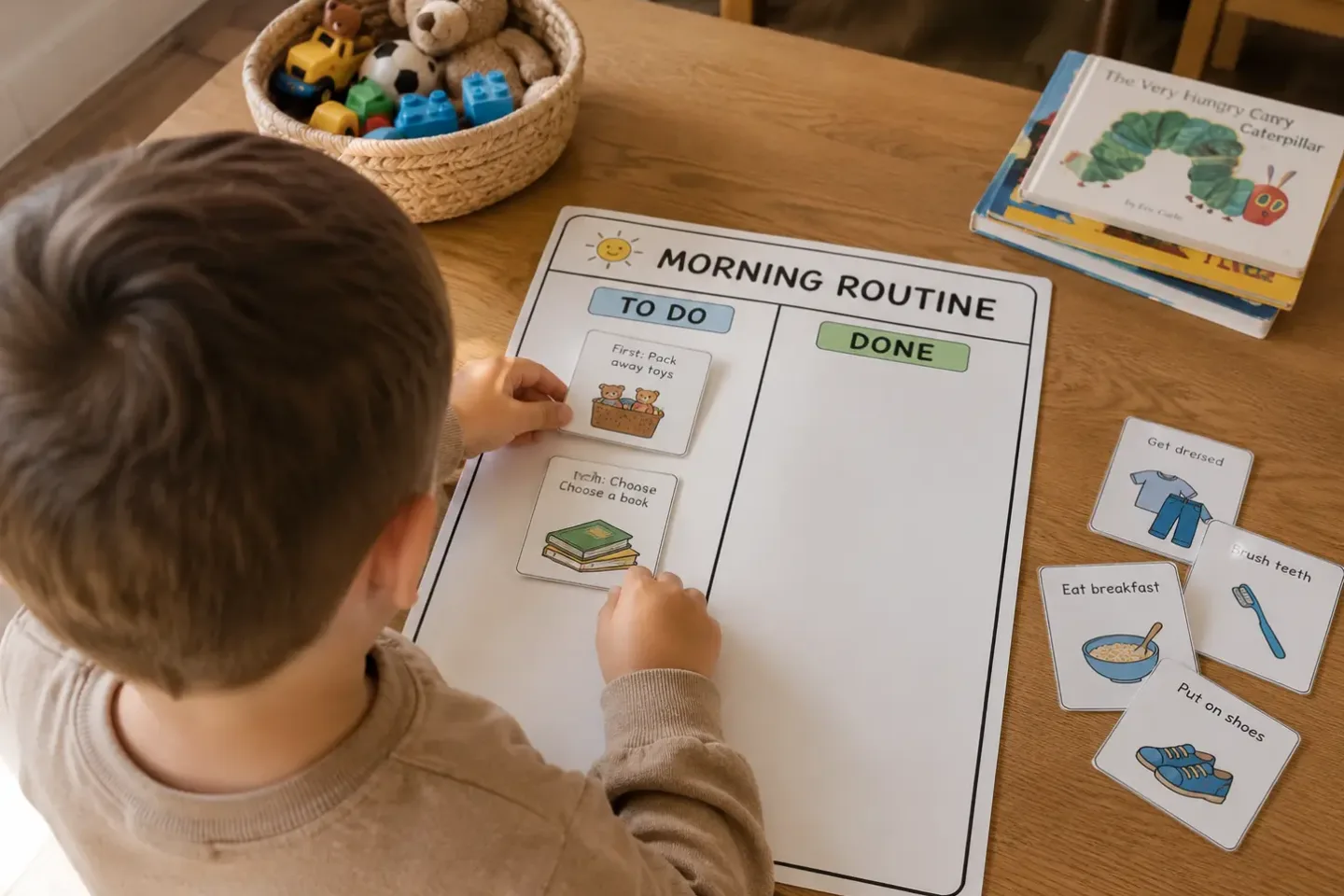
Make the next step predictable. Use a brief warning, a consistent cue and one visible action such as moving a routine card from To Do to Done. Keep language short and allow time for the child to shift attention.
Why transitions can be difficult
Stopping play, leaving home, getting dressed or moving to bed can involve several demands at once. A child may need to stop something enjoyable, understand new language, manage disappointment and organise their body for the next task.
A simple transition plan
| Before | During | After |
|---|---|---|
| Give one short warning and show the next step. | Use calm, brief words and help the child begin. | Notice completion and move the visual card to Done. |
- Choose one difficult daily transition to practise.
- Use the same cue each time: a picture, phrase, timer or song.
- Offer a limited choice where possible: “Blue shoes or red shoes?”
- Keep the instruction to one step.
- Build in enough time so urgency does not add pressure.
- Review what helped after the child is calm.
Limits and support
Visuals and routines are tools, not guarantees. Strong distress can be linked with tiredness, sensory needs, anxiety, communication or developmental differences. Seek individual guidance from an educator, GP or appropriate professional when difficulties are frequent, intense or limit everyday participation.
Related resources
Frequently asked questions
How much warning is useful?
Use a short warning the child can understand, then follow through consistently.
Do visuals help everyone?
They can reduce uncertainty, but children differ and some need other support.
What if distress continues?
Keep everyone safe, reduce language and review the demands when calm.