
Quick answer
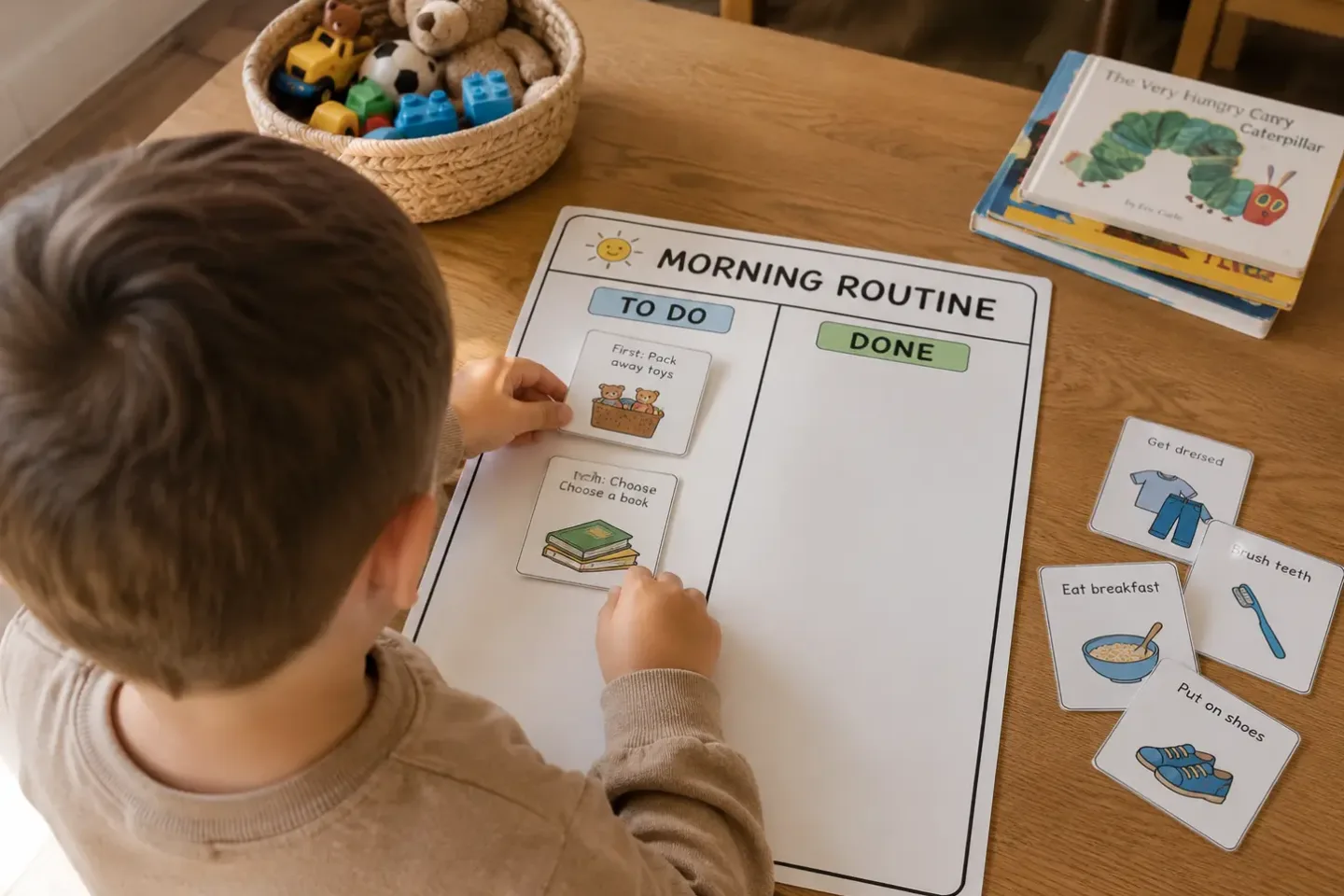
For preschool and early primary children, a useful morning routine is calm, visual and predictable. Begin gently, use a small number of clear steps and point to the chart instead of repeating long instructions.
Suggested morning steps
- Wake up
- Toilet
- Wash hands and face
- Get dressed
- Eat breakfast
- Brush teeth
- Pack bag
- Shoes on
- Ready to go
Start the morning gently
Open curtains, use a warm voice and allow a little time to move from sleep into the day. When possible, replace pressure phrases with one clear next step.
| Instead of saying | Try saying |
|---|---|
| “Hurry up.” | “Let’s do the next step.” |
| “Why aren’t you ready?” | “Let’s check your chart.” |
| “Come on!” | “First toilet, then breakfast.” |
| “No, not now.” | “We can do that later. First, get dressed.” |
How to introduce the chart
- Choose only the steps your child needs.
- Show the chart at a calm time.
- Practise moving one card to Done.
- Use the same short words each morning.
- Add steps only after the shorter routine is familiar.
Use First / Then
First / Then language makes the sequence visible: “First shoes, then outside” or “First brush teeth, then choose a book.” Keep both parts realistic and follow through.
If the morning is still difficult
Look at sleep, hunger, time pressure, sensory comfort, the number of instructions and the difficulty of the next step. Some children need more processing time or individual support. If routines are consistently distressing, discuss your observations with the child’s educator, GP or relevant professional.
Safety and limits
Keep routine cards and fasteners suitable for the child’s age and out of reach if they present a choking risk. A chart supports predictability but cannot address every sleep, sensory, anxiety, communication or developmental concern.
Frequently asked questions
What age is this for?
Roughly ages 3-7, with fewer cards for younger children.
What if it does not work immediately?
Practise when calm, reduce the number of cards and use short language.
Should I use rewards?
Praise or a tick can help, but predictability and independence are the main goals.