Quick answer
The best school readiness toys for ages 3-5 are simple, open-ended and useful in several ways. You do not need products labelled “educational.” A set of blocks can support patterns, counting, language, construction and pretend play.
Editorial note: This is a category guide, not a set of product reviews. VersaKids has not added product links, prices, ratings or affiliate links to this page.
| Toy type | Best for | Skills supported | Age guide |
|---|---|---|---|
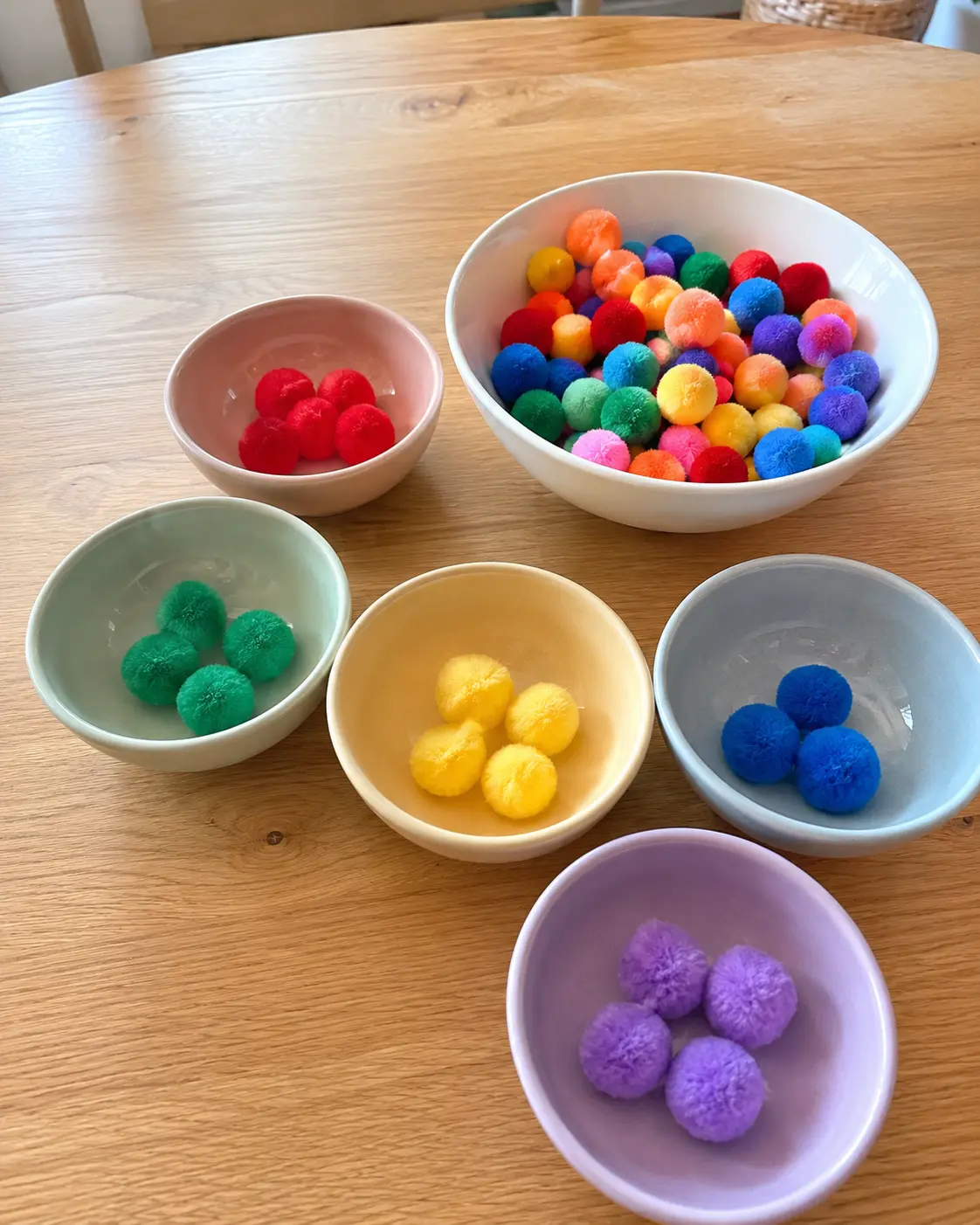
| Pom poms + bowls | Sorting | Fine motor, colours, focus | 3-5 |
| Pattern blocks | Copying models | Visual focus, problem solving | 3-5 |
| Alphabet cards | Letter sounds | Early literacy, listening | 4-6 |
| Counting toys | Numbers 1-10 | Counting, one-to-one matching | 3-5 |
| Visual routine cards | Independence | Sequencing, routines | 3-7 |
| Simple puzzles | Focus | Problem solving, persistence | 3-5 |
| Pretend-play sets | Language | Communication, social play | 3-6 |
| Memory games | Attention | Memory, turn-taking | 4-6 |
Fine motor tools
Large pom poms, child-safe tongs, playdough tools, threading materials and peg activities can offer grasping and hand-eye coordination practice. Choose pieces that suit the child’s stage.
Use them in the Pom Pom Colour Sorting Activity.
Focus and problem-solving toys
Pattern blocks, wooden puzzles, matching games and construction sets give children a visible problem to explore. Open-ended pieces usually offer more than one level of challenge.
Use them in the Pattern Blocks Game.
Early literacy materials
Alphabet cards, letter magnets, picture cards and books can support sound play and conversations about print. Keep sessions interactive and short.
Use them in the SATPIN Letter Sound Game.
Early numeracy materials
Counting bears, toy animals, blocks or pom poms can represent real quantities. Number cards become more meaningful when paired with objects.
Use them in Counting 1-10 with Toys.
Routine and independence tools
Visual routine cards, First / Then cards and a simple timer can make a sequence easier to understand. A tool is most useful when adults introduce it calmly and use it consistently.
Use the Morning Routine Chart.
You do not need expensive toys
Bowls, spoons, blocks, picture cards, books and toy animals can support many of the same skills. The best choice is safe, appealing to the child and flexible enough to use in different ways.
What to check before buying
- Age grading and manufacturer instructions
- Whether small parts suit the child
- Whether magnets are securely enclosed
- Durability and ease of cleaning
- Whether the toy has more than one play use
- Whether a simple household alternative already exists
Safety note
Small parts, pom poms, beads and magnets can be unsafe when mouthed or swallowed. Follow age labels, inspect toys for damage and supervise as appropriate. Product Safety Australia advises urgent medical help if a child may have swallowed magnets.
Frequently asked questions
What toys help with school readiness?
Toys that invite communication, movement, focus, counting, early literacy, problem solving and independence can all be useful.
Do I need expensive toys?
No. Simple materials can support rich play when adults offer a clear idea.
Are screen-based toys necessary?
No. Hands-on materials offer many valuable opportunities to move, sort, build, count and talk.