Quick answer
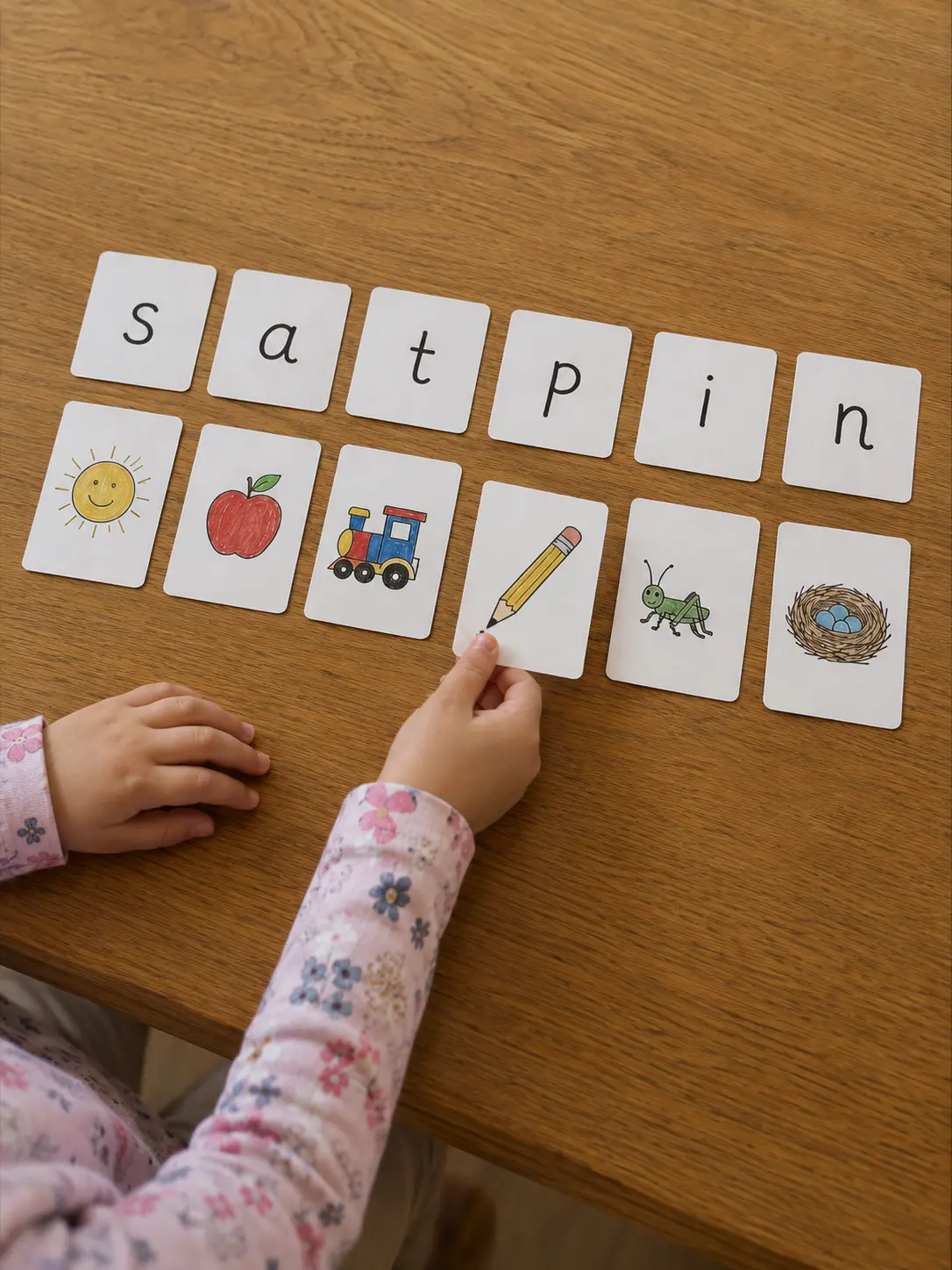
SATPIN is a useful early set of letters because the sounds can later combine into simple words. At home, begin with listening and matching: show one letter, say a common sound, and find a picture or object that starts with that sound.
| Letter | Common sound cue | Picture idea |
|---|---|---|
| s | /s/ | sun, sock |
| a | /a/ as in apple | apple, ant |
| t | /t/ | tiger, toy |
| p | /p/ | pig, pencil |
| i | /i/ as in insect | insect, ink |
| n | /n/ | nest, net |
What you need
- Two to six SATPIN letter cards
- Matching pictures or safe household objects
- A quiet play space
How to play
- Choose two letters, such as s and a.
- Say one sound clearly and briefly.
- Show two pictures and ask which one begins with that sound.
- Match the picture to the letter.
- Repeat with a new pair, then stop after a few successes.
Sound tips for adults
Try to keep consonant sounds short: /s/, /t/, /p/ and /n/, rather than adding a strong “uh” sound. Use your normal Australian English pronunciation for the short vowels. If your child’s school uses a specific phonics sequence or pronunciation cue, follow the school’s approach for consistency.
Make it easier
Use two letters that sound and look different, offer only two pictures, and say the word slowly with emphasis on the first sound.
Make it harder
Ask the child to find another object with the same first sound, sort several pictures, or blend simple words only when the individual sounds are familiar.
Safety and limits
Use large, intact cards and only safe household objects. Keep small objects away from children who mouth items. Pronunciation varies by accent and school approach; keep sound practice playful and do not use it to diagnose speech or reading difficulty.
Keep it playful
Sound play can happen during a walk, bath time or book sharing. “I can see a sun. Sun starts with /s/.” Avoid asking the same question repeatedly when the child is unsure.
Related resources
Frequently asked questions
Why start with SATPIN?
These common sounds can later combine into several simple words.
Should I teach names or sounds?
Both matter. This game simply focuses on listening to common sounds.
What if letters are mixed up?
Use only two choices, repeat calmly and avoid testing.