Quick answer
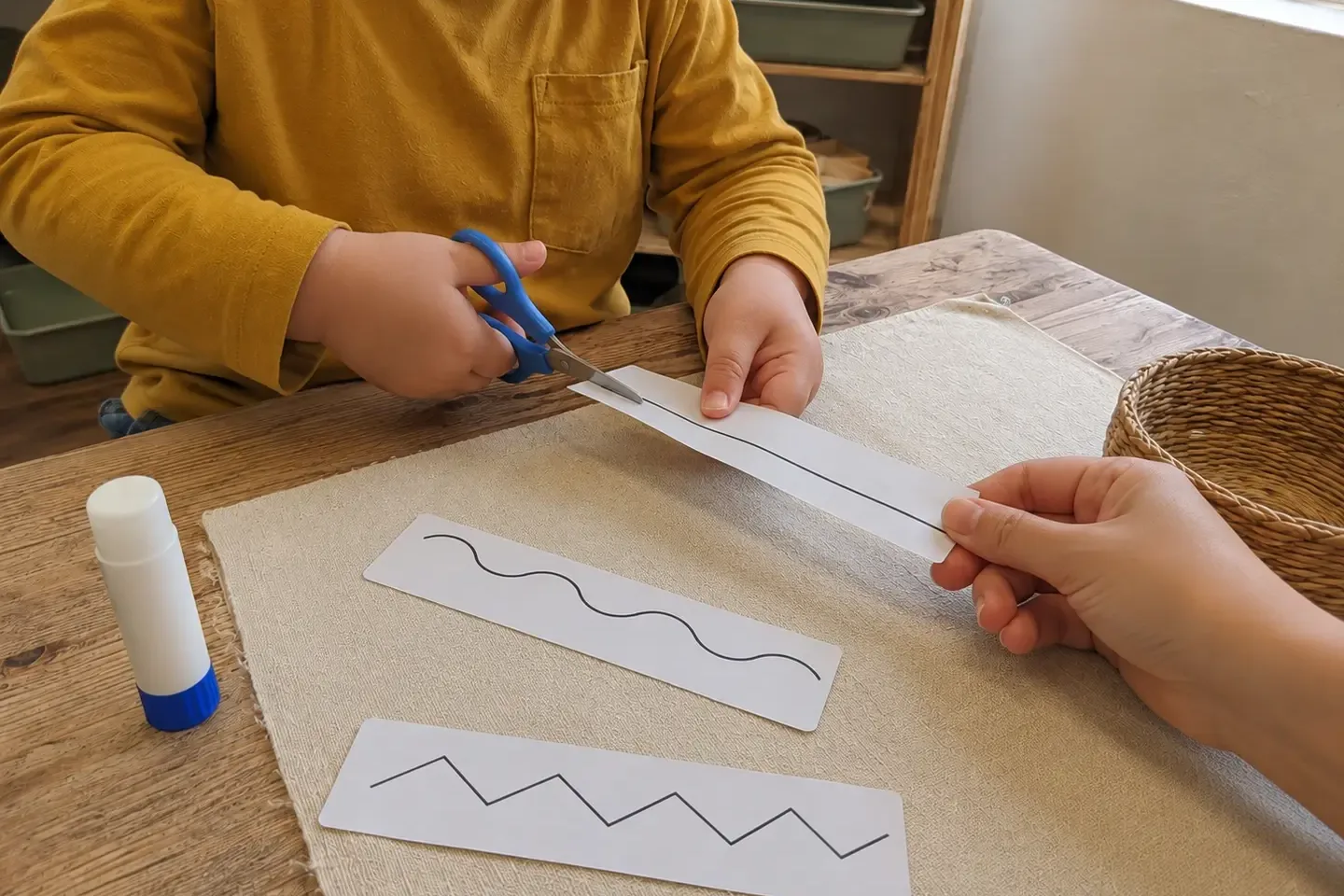
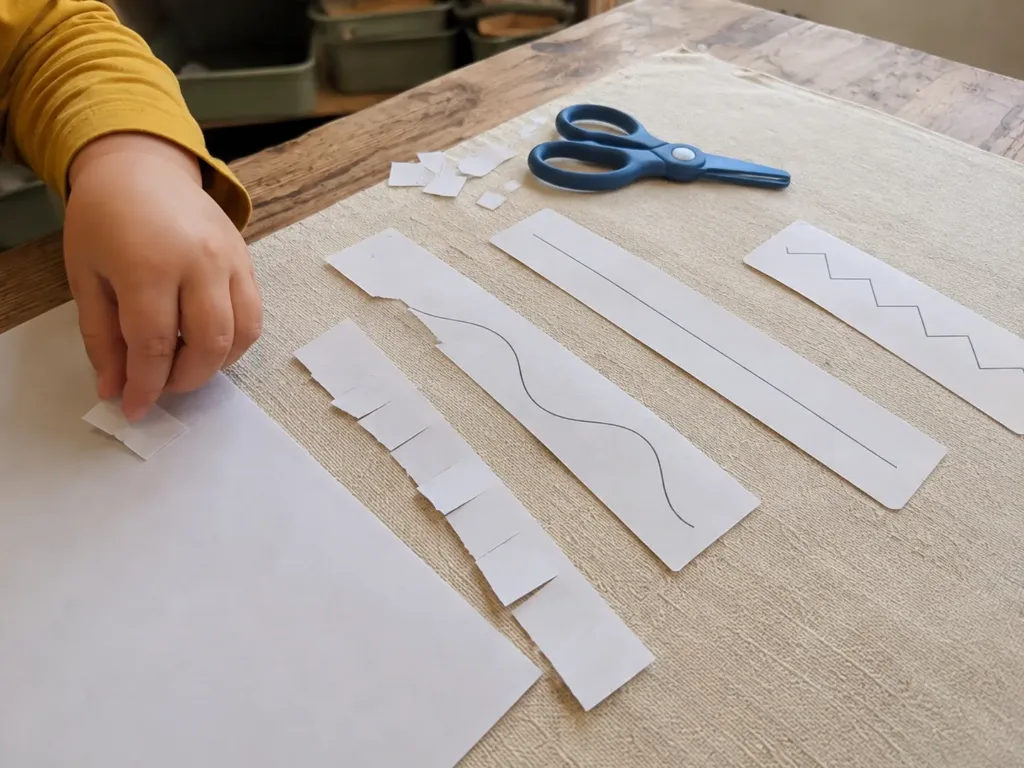
Seat your child at a stable table with age-appropriate blunt-tip scissors. Begin with single snips along a narrow strip, then progress to thick straight, curved and zigzag lines as control develops.
Activity at a glance
| Age | 3–5 years |
|---|---|
| Time | 10–15 minutes |
| Preparation | About 5 minutes |
| Location | Seated at a stable table |
| Supervision | Close supervision |
What you need
- Age-appropriate blunt-tip scissors
- Left-handed scissors if needed
- Narrow paper or light cardstock strips
- Thick printed cutting lines
- Crayons, glue and a separate page, optional
How to do the activity
- Seat your child comfortably with both feet supported if possible.
- Show how to hold scissors with the thumb pointing upwards.
- Begin with short snips along a narrow strip.
- Progress to cutting across a thick straight line.
- Try a gentle curve when the child is ready.
- Use the cut pieces in a simple collage.
- Stop before hands become tired or frustration grows.
Skills supported
- Hand and finger strength
- Scissor control and two-handed coordination
- Hand–eye coordination and visual attention
- Following a line and school readiness
Make it easier
- Use short narrow strips and begin with one snip.
- Hold the paper steady for your child.
- Use thicker lines and larger spaces.
Make it more challenging
- Add curves, zigzags and clear start and stop points.
- Cut around a large simple shape.
- Ask the child to turn the paper while scissors face forward.
Safety and limits
An adult must remain close. Use scissors designed for the child’s age and ability. Children should stay seated, point scissors away from their body and never walk while holding them. Store scissors immediately afterwards. Stop if hand position becomes unsafe; speed and neatness are not the goal.
Related activities
Frequently asked questions
What should a beginner cut?
Start with single snips across a narrow paper strip.
Which scissors are suitable?
Choose age-appropriate blunt-tip scissors and the correct hand orientation.
When should we stop?
Stop when hands tire, frustration grows or safe positioning becomes difficult.